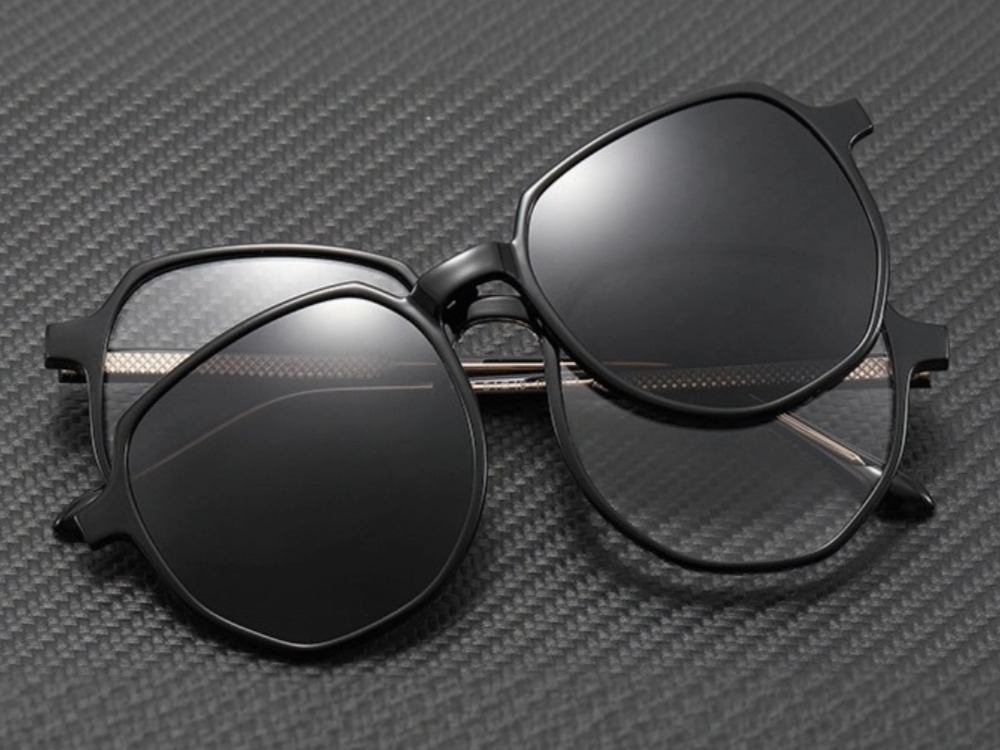
When you shop for new prescription glasses, picking the right lens type often feels overwhelming. Single vision, bifocal, and progressive lenses are the three most widely used options, each designed for different vision needs, daily routines, and budgets. Below we explain how each type works, who it fits best, and their core differences.
Single vision lenses
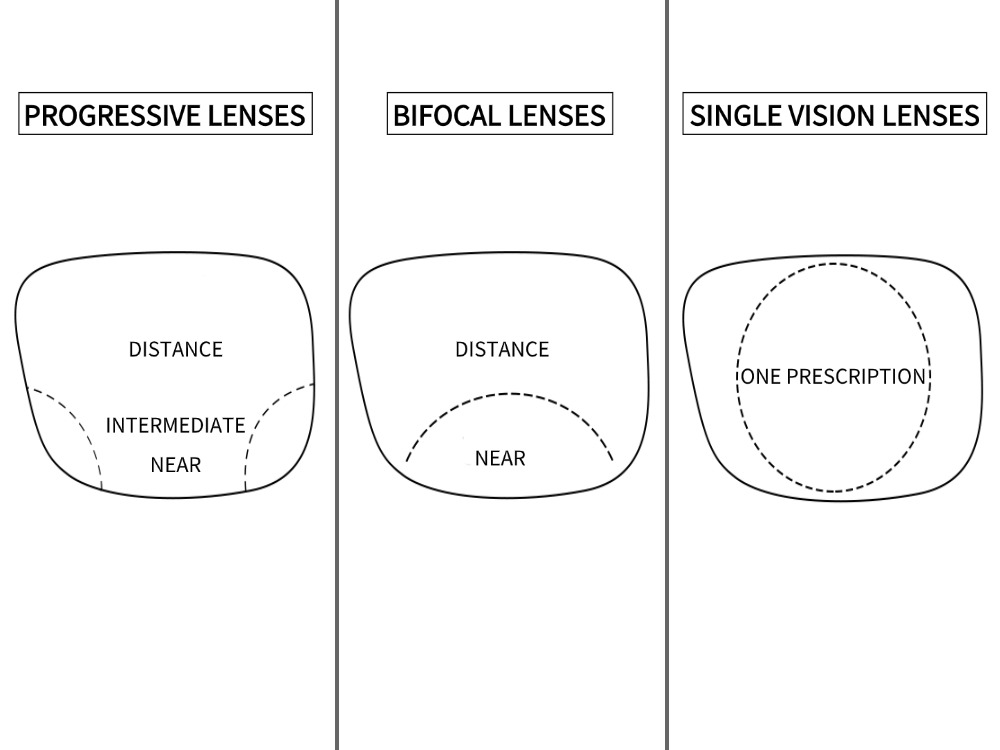
Single vision lenses have one consistent prescription power across the entire lens surface. They correct vision for one viewing distance only — either distance vision for nearsightedness, or near vision for reading and farsightedness. They cannot handle both far and close vision in one pair.
This is the most common and affordable lens type. It requires almost no adjustment period, and there is no peripheral distortion. It works best for people who only need correction for one viewing distance.
Bifocal lenses
Bifocal lenses combine two separate prescription zones in one lens. The upper large area is for distance vision, and a smaller, distinct segment at the bottom is for close-up tasks like reading or phone use. A clear visible line separates the two zones.
Made for people with presbyopia who also need distance correction, bifocals let you switch between far and near vision with one pair of glasses. They are more affordable than progressive lenses, but the visible line affects appearance, and they do not support intermediate vision like computer screens.
Progressive lenses
Also known as no-line bifocals, progressive lenses feature a smooth, gradual power shift from the top to the bottom of the lens. The top portion corrects distance vision, the middle zone works for intermediate distances like computer monitors, and the bottom area handles close-up reading. There is no visible dividing line for a more natural, seamless look.
Progressive lenses cover all viewing distances in one pair, making them ideal for all-day, all-scenario use. The tradeoff is a 1–2 week adjustment period for first-time wearers, mild peripheral distortion at the lens edges, and a higher price point.

How to choose the right lens for you
- If you only need correction for one distance (far or near), single vision lenses are the simplest and most cost-effective pick.
- If you have presbyopia and need both far and near correction but have a tight budget and don’t mind a visible line, bifocal lenses work well.
- If you want a natural appearance, need clear vision for far, intermediate and near tasks, and can accept a short adjustment period, progressive lenses are the most versatile option.
Final note
The best lens choice depends on your exact prescription, daily habits and personal preference. Always consult your optometrist to find the option that fits your vision needs best.